
Clinical knowledge
PCL – The future nose shaping material?
PCL – The future nose shaping material?
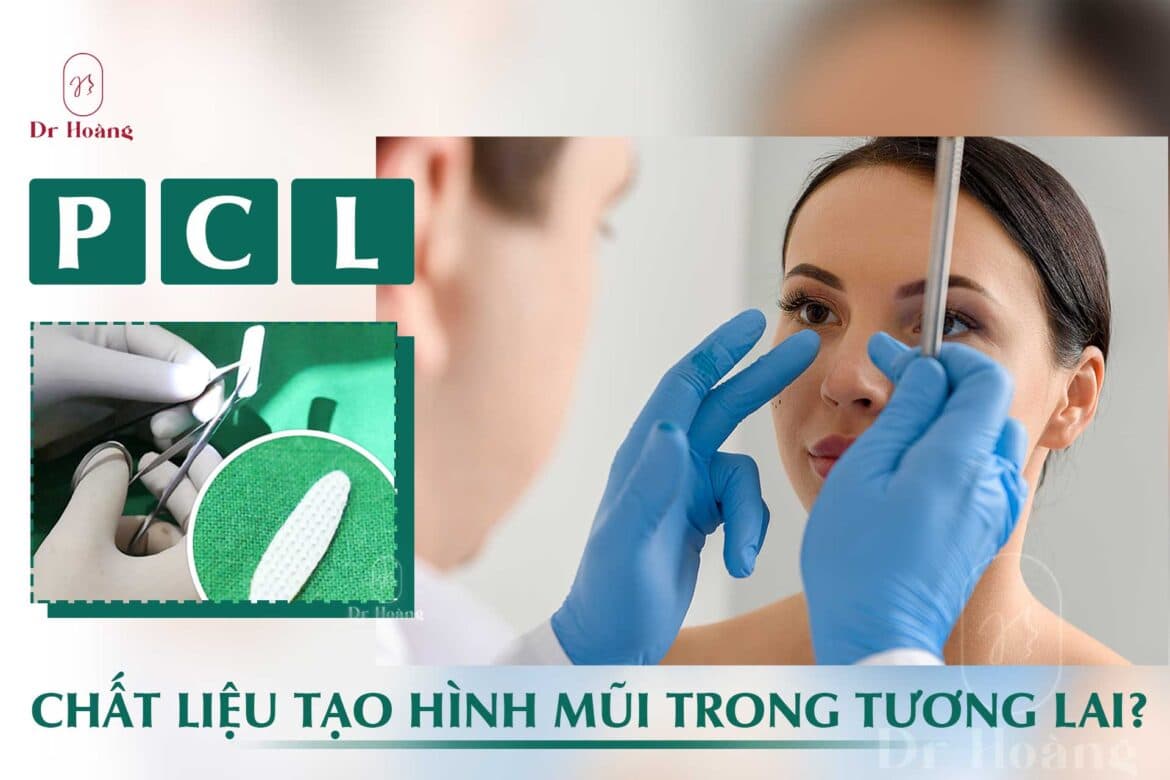
Today in the field of aesthetic shaping, which at the forefront of nasal shaping has a lot of artificial materials that are studied, fabricated and used to replace bone structures, nasal cartilage defects due to malformations, pathologies, injuries or mainly due to the growing need for human beauty.
Besides traditional artificial materials such as silicone, ePTFE, recently the appearance of PCL material (http://bsthantronghuyhoang.com/chat-lieu-pcl/) is considered a breakthrough in the technology of making medical materials and shaping. Let's find out what PCL is.
Overview of PCL material
- PCL (Polycaprolactone)has the chemical formula (C6H10O2) N as 6-Caprolactone polymer or commonly known as Polycaprolactone.
- The PCL material is synthesized from crude oil or through the ring-opening polymerization reaction ε-caprolacton with catalysis as a device.
- PCL is a biodegradable polyester with high toughness and biocompatibility. PCL is durable in water, oil, solvent and chlorine.
- PCL decomposes more slowly than other biodegradable polyester under normal physiological conditions.
- This is a non-toxic material, good compatibility with many polymers, so it can be mixed with other polymers.
- When combined with the calcium phosphate group, PCL has good adhesion, which makes cell proliferation favorable.
PCL – Material in future aesthetic shaping
PCL is inherently a hydrophobic, semi-crystalline polymer with good flexibility, toughness. This material forms a well-absorbable network, is easy to manipulate and has a slow decomposition rate to H2O and CO2 (harmless to the body) for about 3~4 years. Because of these characteristics PCL is used by some as a material to shape or replace bulkhead cartilage in rhinoplasty (http://bsthantronghuyhoang.com/dich-vu/nang-mui-cau-truc/).
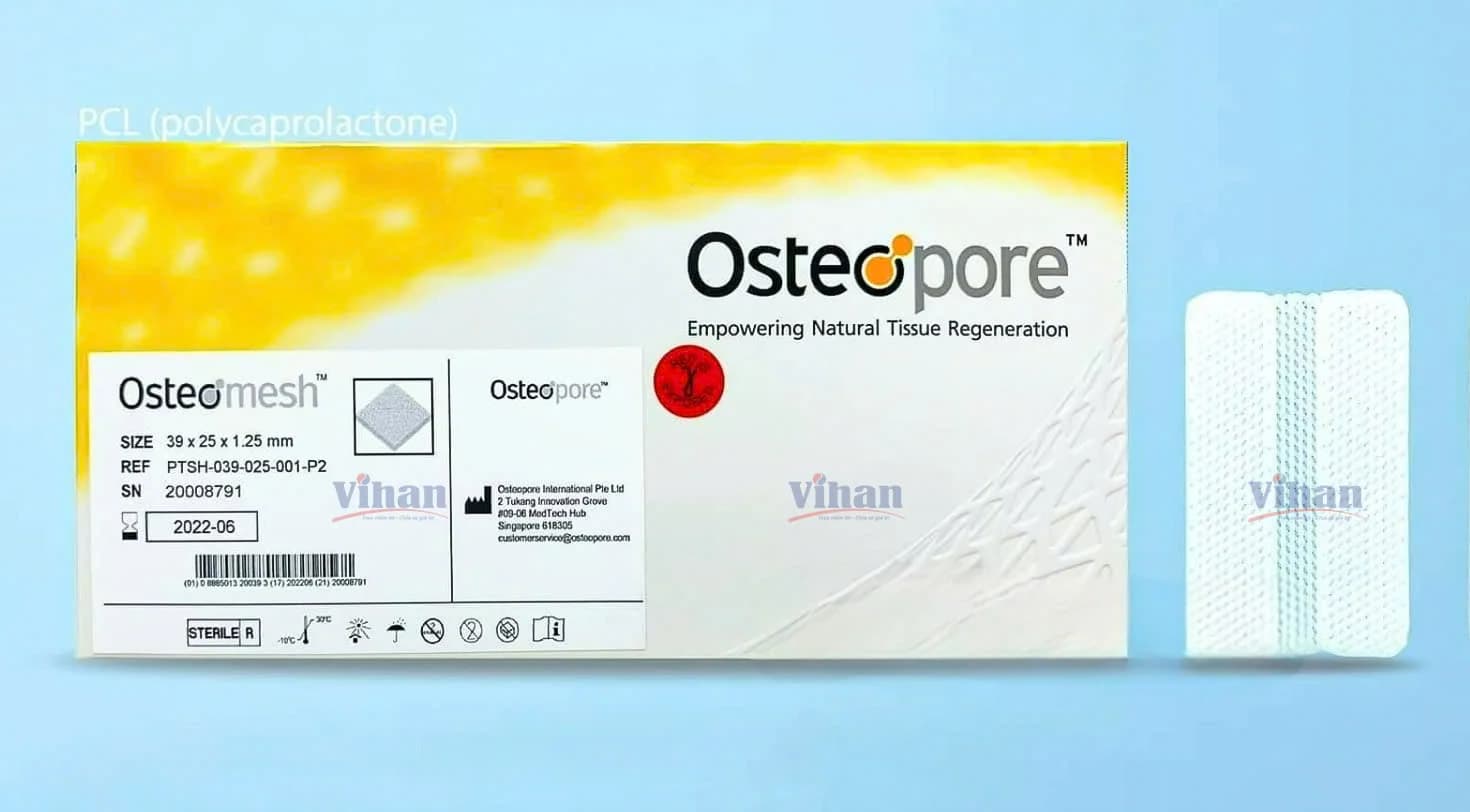
The PCL material (in New nasal shaping materials such as TnR mesh or Osteopore) is shaped with 3D Printing technology into fibre mesh grafts and resembles biological scaffolding with a small porous structure.
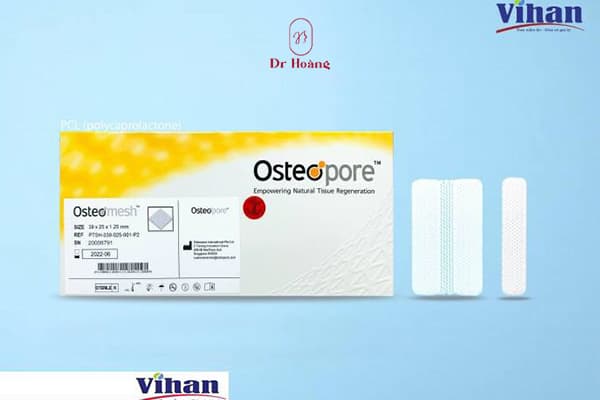
This biological scaffolding is manufactured using 3D printing technology, for optimization of shape and durability, internal porous structures are also fully interconnected.
Thanks to its tiny porous structure properties, this biological scaffolding allows other surrounding healthy connective tissue cells to slowly invade into these porous structures to make cell regeneration easier.
Originally a polyester with good cell absorption and regeneration, these PCL scaffolds are used as an alternative to defective cartilage or bone.
This material creates an optimal growth environment, increases its viability, development, as well as increases the body's ability to regenerate connective tissue cells (fibroblasts, cell cells, amniotic fluid).
At the same time, PCL also facilitates oxygen and nutrients to nourish these cells easily and become scaffolding for nourishing cells.
As a result, after a certain period of time, PCL supports the regeneration of the body's own biological materials to form extracellular matrices. Collagen, for example, forms a fibrous tissue network that supports soft tissues, with beta-tricalcium phosphate releasing caxi ions to increase bone/cartilage regeneration, which in turn, PCL makes an important contribution to the regeneration of damaged or defective cells.
With safety and as an alternative absorbable material, PCL (Polycaprolactone) is recognized by the FDA as a pepper material, used as an implant in the human body with special applications,…
PCL in addition to being a material in nasal aesthetic shaping, it is also applied in other medical fields.
Other applications of PCL in medicine
People pay attention to the applicability of PCL as a biomaterial because in the physiological environment (e.g. in the human body) PCL can decompose by hydrolysis of ester bonds. Compared to polylactic, PCL decomposes more slowly so it can cause parts / devices to enter the living body.
The U.S. Food and Drug Administration (FDA) certifies that PCL can serve as a medicine or medical suture for humans.
Bone replacement: bones play a bearing role for the body during activity and movement. Cracks or fractures heal for a long time, and during recovery, the bones bear very poorly. For steel nails or braces to fix, these devices will be removed after a while, when the bone has healed but is still very weak and the risk of breaking again is very high. Using PCL will make the material bond to the bone, stay in the bone longer. Along with this, PCL will be hydrolyzed gradually over time, making the bones heal longer and strengthening the bearing of the bones higher.
Drug distribution in the human body: PCL is used as a device that controls the process of drug distribution in the human body. For example, implant a contraceptive stick.
Use as a self-suture: traditional sutures cost both time and money for the doctor and the patient because within 7-10 days after suturing, the patient must come to get the suture out. If using sutures made from PCL, this is no longer necessary because the material will decompose over time and help save costs and treatment time.
Source: https://bsthantronghuyhoang.com/chat-lieu-pcl/
Reference source: original article on vihanmed.vn. Checked on 2026-09-11.