
Clinical knowledge
Rhinoplasty materials are used in cosmetic surgery today

The product is made from PCL material: Osteopore and TnR Mesh. PCL material is used for many medical applications such as: bone replacement, drug distribution in the body, or just self-targeting, PCL material is shaped with 3D Printing technology into fibre mesh grafts, like a biological scaffolding, used as an implant to replace the cartilage or bone defects of the nasal septum area.

There are many types of rhinoplasty materials (http://bsthantronghuyhoang.com/vat-lieu-nang-mui/) used in cosmetology today. Depending on the condition of the client, the type of surgery the doctor will choose the most suitable material.
Characteristics of ideal rhinoplasty materials
- Physically and chemically inert and biologically neutral.
- Easy to cut and can be autoclaved, dried and sterilized.
- Color compatible with tissue.
- Resistance to injury.
- Anti-infection ability.
- Anti-exposure ability.
- Does not invade surrounding tissue and is easy to remove.
- Easy to find and not expensive.
- It is possible to use structural support and compensate for tissue damage. Classification of rhinoplasty materials by origin of autograft biomaterials
- Autologous fat: can monolithic adipose tissue or fat solution from liposuction procedure.
- Organizational flap( flap): soft tissue or soft tissue that combines scales, bones, cartilage,…
- Cartilage: septal cartilage, ear cartilage, rib cartilage,...
- Bones: iliac crest spongy bone, skull plate,...
- Fascia: temporal scales, large pectoral scales, thigh scales,...
- Fat mesotherapy (http://bsthantronghuyhoang.com/trung-bi-mo/) (dermofat graft): groin, buttocks, lower abdomen,…
- Alloplastic, heterograft Biomaterials include pigskin mesoderma; ivory; cow's cartilage, duck's cartilage, homograft biomaterials (irradiated cartilage) this is a material taken from rib cartilage (donated cartilage source) through tissue disinfection processes to remove potential immune, antigenic, germs, viruses, and yoke elements that still preserve the biochemical integrity and natural tissue structure of rib cartilage, it will then be sterilized with gamma rays and packaged aseptic. Today, people use lyophilized rib cartilage of their kind to make materials used in the surgery of the focal area of the eye, tragus cartilage, joints, cladding in The Shape of the nose, lyophilized rib cartilage is used as a material to replace the cartilage defects – the bones of the septum, the nasal pillars, the wings of the nose and the bridge of the nose. With high hardness and good biocompatibility, this material is used quite easily. However, the presence of transplantation, self-absorption or inflammation reactions may also occur. Common thigh scales (TPFL) product representation: Tutoplast and Allosheet. Thigh scales (from the donor corpse source) must go through tutoplast tissue disinfection processes, including alkylation, osmosis and oxidation methods, solvent dehydration, double aseptic packaging, and finally gamma-ray irradiation. These stages are aimed at eliminating immune structures, antigens, germs, which still preserve the biochemical integrity and natural tissue structure of the thigh scales.
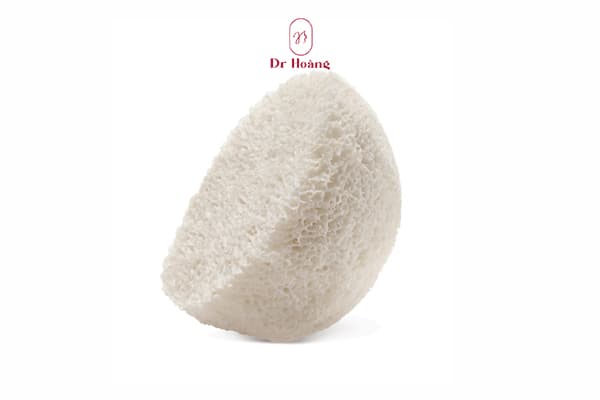
- The Tutoplast procedure is applied to materials derived from thigh scales used in the orthopedic trauma industry, abdominal surgery, plastic surgery, ophthalmology and urology, yoke in rhinoplasty, TPFL used in rhinoplasty, rhinoplasty, paranasal sinus regeneration and rhinoplasty. Taking tpfl in rhinoplasty is quite safe, effective, easy to shape, easy to manipulate and especially gives a smooth nose shape with a low risk of allergic inflammation, graft discharge and infection after surgery. TPFL binding to surrounding tissues after surgery should avoid fibrosis and reduce material displacement. However, reabsorption and self-absorption of the material is one of the biggest disadvantages of TPFL.
- Amphibious skin mesoderma (ADM) products represented are: AlloDerm and MegaDerm. This material is obtained from human skin (from donated sources) through specialized processing techniques to remove the epidermis and the cellular components of the dermis that can cause allergic, immune, infectious reactions (such as cell debris, underlying antigens and viruses), eventually remaining components present in the mesodermis before freezing. Later, Alloderm is irradiated to sterilize, while MegaDerm is irradiated to electron beams before aseptic packaging. There are many types of ADM that have been introduced for use as soft tissue replacement materials in phylogenetic surgery such as: breast shaping, repair of abdominal wall defects, Burn Treatment, Skin Grafting,…
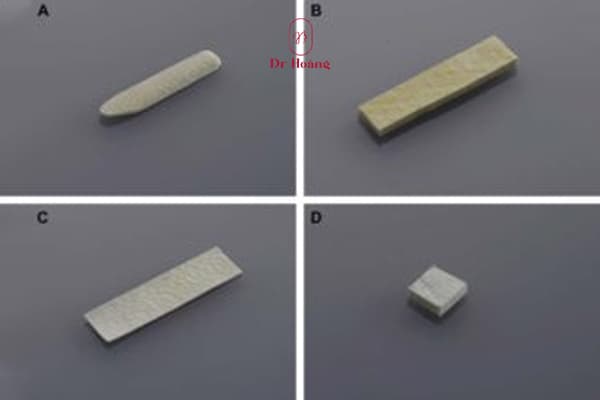
- In nasal aesthetics, ADM is used as a material that lifts the bridge of the nose or shapes the tip of the nose, and is useful for correcting irregularities in the bridge of the nose, as well as wrapping self-or exotic grafts to reduce the likelihood of exposing the material, especially in thin skin people. ADM binds to the surrounding tissues under the skin after surgery should avoid the condition of fibrosis and less displacement, it has many styles of various sizes, so it is also easy to shape and easy to manipulate. However, problems such as allergic inflammation, transplant discharge, and postoperative infections are still possible, especially self-dissipation of postoperative material is difficult to avoid.
- Synthetic Silicon is a material used for a long time and is still in popular use in the world such as: Bistool Softxil, Mantis, Alice cartilage cake, breast pocket mentor or motiva, Silicon preparations used in shaping are Silastic and are very familiar to cosmetologists because they create implants for body areas (nose, chin, cheeks, calves, chest, buttocks, etc.v...).
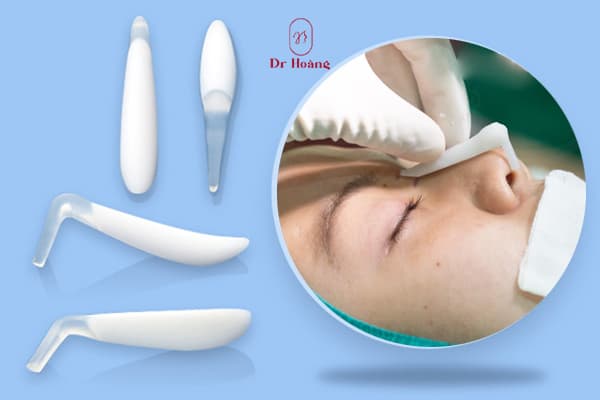
- In addition to the general characteristics of silicon, Silastic has many advantages for use such as soft, tough, strong, easy to operate during surgery, easy to peel and edit as required, easy to shape the shape of the organ to be transplanted. If the aesthetic results are not satisfied can be removed for easy editing changes. Features of the bridge of the nose with flexible silicone material:
- Long-term cosmetic effect, less allergic reactions, elimination or infection if the correct sterile procedure and correct surgical techniques (the rate of allergies, inflammation is about 1.5-2%)
- Capsule formation should not stick to the neighboring organization, mobile and easy to move after caesarean section, but easy to remove to replace Editing.
- Calcification due to calcium deposition on the implant or inner surface of the fibrous sack makes the rugged bridge of the nose visible or palpable Medpor this is a preparation of polytetrafluoroethylene (PTFE) (PTFE is a polymer of ethylene (polyethylene) invented by John Cropper in 1966). In 1999, Paul O'keeffe built PTFE into a plate, block, honeycomb structure with small holes 100-250m in size, allowing soft tissue and also bone cartilage tissue to grow in, commercially known as Medpor, manufactured by Porex Surgical. Medpor is manufactured into implant materials of different shapes and sizes to replace body structures (ears, chin, temples, nose, cladding). It has good hardness, so Medpor is often used to replace the septum, nasal pillars and can also form the bridge of the nose. The prevalence of Medpor complications is about 19%. ePTFE (expanded polytetrafluoroethylene) ePTFE is the material that produces products such as: Surgiform (pureform, ICS), Gore-Tex, Megaform,… In 1969, Wilbert L.Gore, Robert Gore et al. (USA) studied PTFE stretching technology creating ePTFE, a Styrofoam tough material with many small holes 10-30 U in size, waterproof and evaporating water, which was patented in 1976. In 1978, the material was marketed under the trade name Gore-Tex, which has many applications in the field of life. ePTFE was first used by Soyer in 1972 to join blood vessels. In 1983 Neel was used in shaping the face area. In 1993 it was approved by the FDA for use in cosmetic shaping. Gore-tex is used in 2 forms: solid grating & block (grating has smaller holes in the form of blocks and softer). Initially, The Shape of the nose with ePTFE material at the forefront is Gore-tex often use solid blocks to be able to hew and shape. Then silitex nasal fillers were born (inside the core is silicon and outside covered with ePTFE film). Nowadays, many manufacturers give birth to rods that shape the bridge of the nose with the whole material of ePTFE (surgiform, megaform, ICs) of different shapes and sizes, suitable for all the wishes of surgeons and customers.
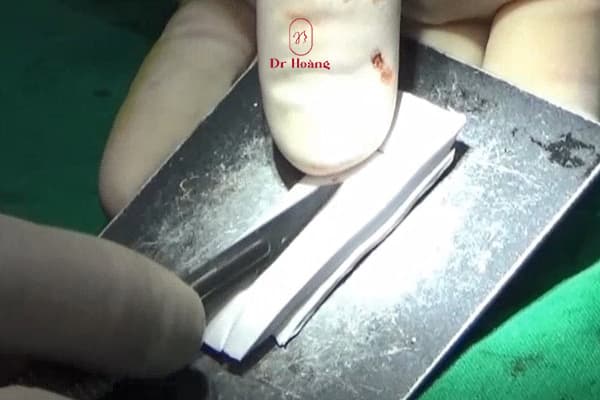
- Gortex material Features of nose bridge made of ePTFE material:
- Less calcified than silicon but more difficult to shape, hew, peel than silicon.
- The format can be adjusted after placement.
- Do not form fibrous sacks such as flexible silicon because the neighboring tissue grows in and is attached to the implant, so it is less twisted, less mobile and difficult to remove when needed.
- However, with silicon waves (silicon waves) have formed old fibrosis, the surgery is difficult to remove the fibrosis, so when replacing the material ePTFE will be difficult to grow adjacent tissue to stick to the implant.
- Allergic inflammation and infection are higher than other materials (about 4-5%). PCL (Polycaprolacton) products made from PCL material: Osteopore
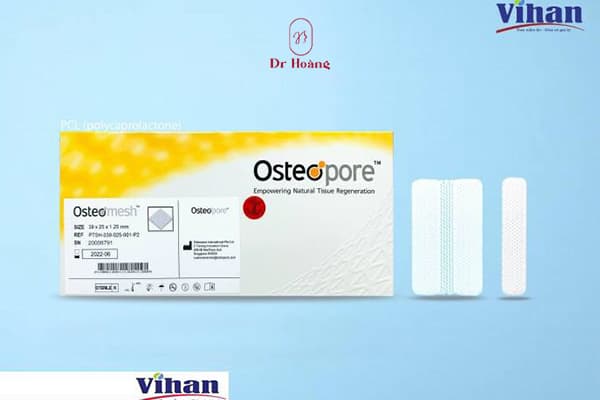
- PCL is a biodegradable polyester with high toughness and good biocompatibility, durable in water, oil, solvent and chlorine. PCL decomposes more slowly than other biodegradable polyester under human physiological conditions into H2O and CO2. It is non-toxic and can be mixed with other polymers. When combined with the calcium phosphate group, PCL has good adhesion, which makes cell proliferation favorable. PCL is used for many medical applications such as: bone replacement, drug distribution in the body, or just self-targeting, PCL material is shaped with 3D Printing technology into fibre mesh grafts, like a biological scaffolding, used as an implant to replace cartilage or bone defects of the nasal septum area. The septum (nasal column) is shaped from PCL with less complications (tilt, fracture, expose or puncture to the skin) than Medpor.
- Supramid mesh (polyamid) Supramid mesh is a product of Ethicon Sommerveille, New York. This material is an organopolymer of e-caprolactam, a soft structure that fits in with soft tissue, containing melanin (black pigment) that is capable of binding development to cells organized locally. Infection rate 0.8%, deformation rate 1.5%. Mersilene mesh (polyethylene) Mersilene mesh is a product of Ethicon Sommerveille, founded in 1950. The product is 30×30 cm nonabsorble fibers, which can be sterilized. This material is soft, not palpable under the skin. Prolene mesh (polypropylene) Prolene mesh is the product of Ethicon Prolene Suppliers, which has a woven fiber mesh sheet structure (such as prolene thread). Surgicel (methylcellulose) Surgicel is also a product of Ethicon in the form of a cellulose, insoluble woven mesh. Usually used to stop bleeding during surgery. can make fillers, soft, safe. Source: https://bsthantronghuyhoang.com/vat-lieu-nang-mui
Reference source: original article on vihanmed.vn. Checked on 2026-09-11.